THE BIT OF TECHNOLOGY!
The Hardware Frontier: Riot Games' Firmware Mandate and the Evolving Battle for Game Integrity
Introduction: A New Paradigm in Game Security
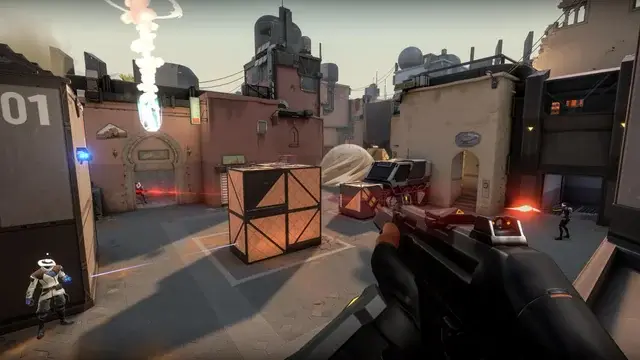
The landscape of competitive online gaming has always been a dynamic battleground, not just between players but also between developers striving to maintain fair play and an ever-evolving ecosystem of cheaters. In a significant move that signals a potential paradigm shift, Riot Games, the powerhouse behind titles like League of Legends and Valorant, has announced that players of its popular tactical shooter, Valorant, will be required to update their PC firmware to continue playing. This mandate, driven by the company's proprietary anti-cheat system, Vanguard, pushes the boundaries of game security, demanding hardware-level compliance in an unprecedented manner. This article delves into the implications of this decision, exploring its historical context, immediate impact, ripple effects across the industry, and what it portends for the future of online gaming integrity.
The Event: Mandating Firmware for Fair Play
Riot Games' recent directive for Valorant players centers on the requirement for their PCs to have specific firmware features enabled: Trusted Platform Module (TPM) 2.0 and Secure Boot. While these technologies are often associated with enterprise security and, more recently, Windows 11 operating system requirements, their mandated integration into a gaming client marks a pivotal moment. The company's stance is unequivocal: failure to enable these features will result in players being unable to launch or participate in Valorant matches. This move is a direct escalation in the ongoing war against cheating, particularly against sophisticated exploits that leverage rootkits or low-level system access, bypassing traditional software-based anti-cheat measures.
At its core, this requirement aims to enhance the security posture of the game environment by leveraging hardware-enforced integrity. TPM 2.0 is a cryptographic module designed to provide hardware-based security functions, including secure generation and storage of cryptographic keys, and platform integrity verification. Secure Boot, on the other hand, is a security standard developed by members of the PC industry to help make sure that a device boots using only software that is trusted by the Original Equipment Manufacturer (OEM). When a PC starts, firmware checks the signature of each piece of boot software, including drivers and the operating system itself. If the signatures are valid, the PC boots; otherwise, it won't. By coupling these two technologies, Riot Games intends to create a more tamper-resistant environment, making it significantly harder for malicious software, including advanced cheats, to inject into the game's processes at a foundational level.
The History: An Arms Race for Integrity
To fully grasp the significance of Riot's firmware mandate, one must understand the protracted history of the anti-cheat arms race. Cheating in online multiplayer games is as old as online gaming itself. Early anti-cheat mechanisms were largely heuristic, scanning game memory for known cheat signatures or unusual player behaviors. These were easily circumvented by savvy cheat developers who quickly evolved their methods.
- Client-Side Anti-Cheat: Initial solutions involved software running alongside the game client, detecting modifications to game files or memory. Examples include Valve's Anti-Cheat (VAC) and PunkBuster. These were effective against rudimentary cheats but struggled against more advanced techniques.
- Kernel-Level Anti-Cheat: The escalation truly began with kernel-level anti-cheat systems. Recognizing that cheats often operate with higher privileges than the game client, developers began deploying anti-cheat software that ran at the kernel level of the operating system. This grants the anti-cheat system deep access to monitor system processes, memory, and even network traffic, making it much harder for cheats to hide. Riot's Vanguard, BattlEye, Easy Anti-Cheat, and some iterations of Denuvo Anti-Tamper are prominent examples. While highly effective, these systems have often sparked privacy concerns due to their privileged access to a user's system.
- Hardware-Level Cheats and the Need for Deeper Security: Despite kernel-level defenses, the cheating industry continued to innovate. Modern, sophisticated cheats often employ techniques like DMA (Direct Memory Access) devices, custom firmware, or even AI-driven image recognition, operating outside the conventional software stack that kernel-level anti-cheat monitors. This new wave of cheating targets the very hardware layer or operates in ways that mimic legitimate user input, rendering traditional software detection less effective. It is this persistent innovation in cheating that has pushed developers like Riot to seek even deeper, more fundamental levels of system integrity. The move to mandate TPM 2.0 and Secure Boot is a direct response to this escalating threat, attempting to close off avenues for exploitation that exist below the operating system and above the kernel.
The journey from simple signature scans to hardware attestation highlights a relentless pursuit of a level playing field, driven by the commercial imperatives of competitive gaming and the fundamental desire of players for fair competition.
The Data/Analysis: Why Now and What it Means
Riot Games' decision to enforce TPM 2.0 and Secure Boot enablement is not arbitrary; it aligns with several concurrent technological and market trends:
- Windows 11 Adoption: Microsoft's latest operating system, Windows 11, has TPM 2.0 and Secure Boot as baseline requirements for installation. As more users migrate to Windows 11, the installed base of compliant systems naturally grows, making such a mandate more feasible. Riot can leverage this increasing hardware readiness to implement stricter security measures.
- Sophistication of Cheats: As previously noted, the complexity of cheating software has reached new heights. Professional cheat developers often sell subscriptions to their tools, which are frequently updated to bypass the latest anti-cheat patches. Hardware-backed security offers a more robust, fundamental barrier against these high-end, often commercially available, cheats.
- Esports Integrity: Valorant has rapidly ascended as a prominent esport, with significant prize pools and a burgeoning professional scene. The integrity of esports competitions is paramount. Any hint of cheating can severely damage a game's competitive credibility, alienating professional players, sponsors, and viewers. This move by Riot can be seen as a strategic investment in the long-term health and legitimacy of Valorant's esports ecosystem.
- Technical Hurdles vs. Security Gains: While the security benefits are clear, the immediate analytical challenge lies in the potential technical hurdles for a significant portion of the player base. Many users, especially those with older PCs or those who have custom-built systems, might have TPM 2.0 disabled or not fully supported. Enabling these features often requires navigating complex BIOS/UEFI settings, a task many casual users may find daunting or even risky. This creates a friction point, trading immediate player accessibility for enhanced security. The data that Riot must have considered involves the penetration rates of compatible hardware and the willingness of players to undertake these technical updates.
- Industry Precedent: This move sets a significant precedent. Other game developers grappling with similar cheating issues will be closely watching Riot's implementation and the resulting impact on its player base. If successful, this could accelerate a broader industry shift towards hardware-level security mandates, redefining the baseline technical requirements for playing modern competitive games.
The core significance of this move right now is Riot's clear declaration that game integrity, particularly in its flagship competitive title, outweighs the potential short-term inconvenience or exclusion of a segment of its player base. It signals a shift from reactive detection to proactive prevention, embedding security at the deepest possible level of the computing stack.
The Ripple Effect: Who Does This Impact?
The consequences of Riot's firmware mandate extend far beyond the immediate interaction between the player and the game, creating ripples across various stakeholder groups:
- Valorant Players:
- Compliant Users: Players with modern hardware and/or Windows 11 already enabled will experience a smoother, more secure gaming environment, potentially encountering fewer cheaters.
- Technically Adept Users: Those with compatible hardware but disabled features will need to navigate BIOS/UEFI settings. While feasible, it requires some technical literacy.
- Non-Compliant Users: Players with older hardware that doesn't support TPM 2.0 or Secure Boot will be unable to play the game unless they upgrade their systems. This could lead to frustration, abandonment of Valorant, or even a push towards hardware upgrades.
- Privacy Concerns: While TPM and Secure Boot are primarily about integrity, the increased hardware-level scrutiny could reignite debates around anti-cheat invasiveness and user privacy, even if these specific technologies are not directly transmitting personal data.
- Riot Games:
- Enhanced Integrity & Reputation: A more cheat-free environment will bolster Valorant's reputation as a fair competitive game, attracting serious players and potentially extending its lifecycle.
- Customer Support Load: The initial rollout will likely lead to a surge in customer support queries regarding how to enable TPM and Secure Boot, requiring significant resource allocation.
- Player Base Dynamics: While a segment might be lost, the remaining player base could be more dedicated, leading to a higher quality competitive experience overall.
- Industry Leadership: Riot positions itself as a leader in anti-cheat innovation, setting a new benchmark for others to follow.
- Hardware Manufacturers:
- Potential Sales Boost: For a small segment of players, this mandate could drive sales of new motherboards, processors, or even entire PCs that are fully compliant.
- Increased Awareness: The mandate highlights the importance of security features like TPM and Secure Boot, potentially influencing future hardware design and consumer expectations.
- The Anti-Cheat Industry:
- New Benchmark: Riot's move establishes a new front in the anti-cheat war, pressuring other anti-cheat providers and game developers to explore similar hardware-backed solutions.
- Innovation Drive: It could spur further innovation in how hardware security features can be leveraged for game integrity.
- The Cheating Industry:
- Increased Barrier to Entry: The cost and technical complexity of developing undetectable cheats will significantly increase, potentially reducing the prevalence of casual cheating.
- Evolution of Cheats: Sophisticated cheat developers will likely attempt to find new vectors of attack, perhaps focusing on exploits within the TPM/Secure Boot implementation itself or exploring even more exotic hardware-based methods that operate entirely outside the PC's main security perimeter.
- Esports Ecosystem:
- Credibility and Investment: Higher integrity in competitive play enhances the credibility of Valorant esports, making it more attractive for sponsors, broadcasters, and professional organizations.
- Level Playing Field: Professional players can compete with greater confidence in the fairness of the competition.
The Future: What Lies Ahead for Game Security
Riot Games' firmware mandate for Valorant players is more than just a temporary fix; it's a forward-looking strategy that could define the next era of competitive online gaming. The implications for the future are multifaceted:
- Widespread Industry Adoption: If Riot's implementation proves successful in significantly curbing cheating without irrevocably alienating its player base, it's highly probable that other major competitive titles will follow suit. Games like Counter-Strike, Apex Legends, Call of Duty, and others that constantly battle sophisticated cheats could adopt similar hardware-level requirements. This would normalize TPM 2.0 and Secure Boot enablement as standard prerequisites for serious online gaming.
- Standardization of PC Requirements: This move, combined with Windows 11's baseline, could effectively raise the minimum technical floor for playing modern PC games. While game developers have historically focused on GPU and CPU requirements, hardware-level security features might become just as crucial, pushing older hardware out of the competitive gaming sphere.
- Evolution of Anti-Cheat Beyond TPM/Secure Boot: The arms race will undoubtedly continue. While TPM and Secure Boot offer robust protection, they are not impenetrable. Future anti-cheat systems might integrate AI and machine learning more deeply to detect anomalous player behavior, even if the underlying system integrity is assured. We could also see further development in custom hardware security modules specifically designed for gaming or tighter integration with CPU-level security features.
- The Ethical Frontier: As anti-cheat mechanisms delve deeper into the operating system and now into hardware firmware, the debate around player privacy and the extent of developer control over a user's system will intensify. Future discussions will revolve around striking a delicate balance between maintaining game integrity and respecting user autonomy and privacy. Transparent communication from developers about data collection and system access will become even more critical.
- Impact on Game Development and Modding: While enhancing security, such stringent measures could also inadvertently impact game modding communities or developers who wish to allow more flexibility in their game environments. The industry will need to navigate this tension carefully, ensuring that security doesn't stifle creativity or legitimate user customization in non-competitive contexts.
- The Long-Term Player Experience: Ultimately, the success of this strategy will be measured by its impact on the long-term player experience. A truly cheat-free environment would undoubtedly enhance satisfaction, foster healthier communities, and cement the legitimacy of esports. However, the challenge lies in ensuring this enhanced security is achieved without creating an overly restrictive or exclusionary ecosystem.
Riot Games' mandate for hardware-backed security in Valorant represents a bold and perhaps inevitable step in the perpetual struggle against cheating. It forces a reckoning with how much control players are willing to cede for the promise of a truly fair competitive environment. As the industry watches, this move is poised to shape not just the future of Valorant, but potentially the very foundation upon which all competitive online gaming is built.