THE BIT OF TECHNOLOGY!
Navigating the Nexus: A Comprehensive Analysis of the UAE's Expatriate Integration Landscape
Introduction: The Grand Arrival and the Initial Ascent
The decision to relocate to a new country is often imbued with a profound sense of anticipation, opportunity, and the promise of a fresh start. For countless individuals and families worldwide, the United Arab Emirates (UAE) stands as a beacon of these aspirations. A dynamic nexus of commerce, culture, and innovation, the UAE has meticulously cultivated an environment that attracts a global tapestry of talent, investors, and entrepreneurs. Yet, beneath the vibrant surface of gleaming skylines and world-class infrastructure lies a complex administrative landscape that all new arrivals must successfully navigate. The initial days and weeks in a new country are universally recognized as critical, setting the tone for long-term integration and well-being. In the UAE, this period is particularly intense, demanding a structured and informed approach to establishing one's footing.
Recent discussions within expatriate communities and official advisories consistently underscore the paramount importance of a well-orchestrated onboarding process. From the moment of arrival, new residents are faced with a series of crucial tasks that, if mismanaged or delayed, can lead to significant inconvenience, stress, and even financial penalties. This article delves into the intricate web of requirements for new residents, examining not only the practicalities but also the broader historical, economic, and societal implications of the UAE's unique approach to expatriate integration. We will explore the critical 'first week' essentials, tracing the nation's journey to becoming a global magnet, analyzing the contemporary forces driving its attractiveness, assessing the widespread ripple effects of a thriving expatriate ecosystem, and finally, peering into the future of this continually evolving landscape.
The Event: The Initial Ascent – Navigating the UAE's Welcoming Labyrinth
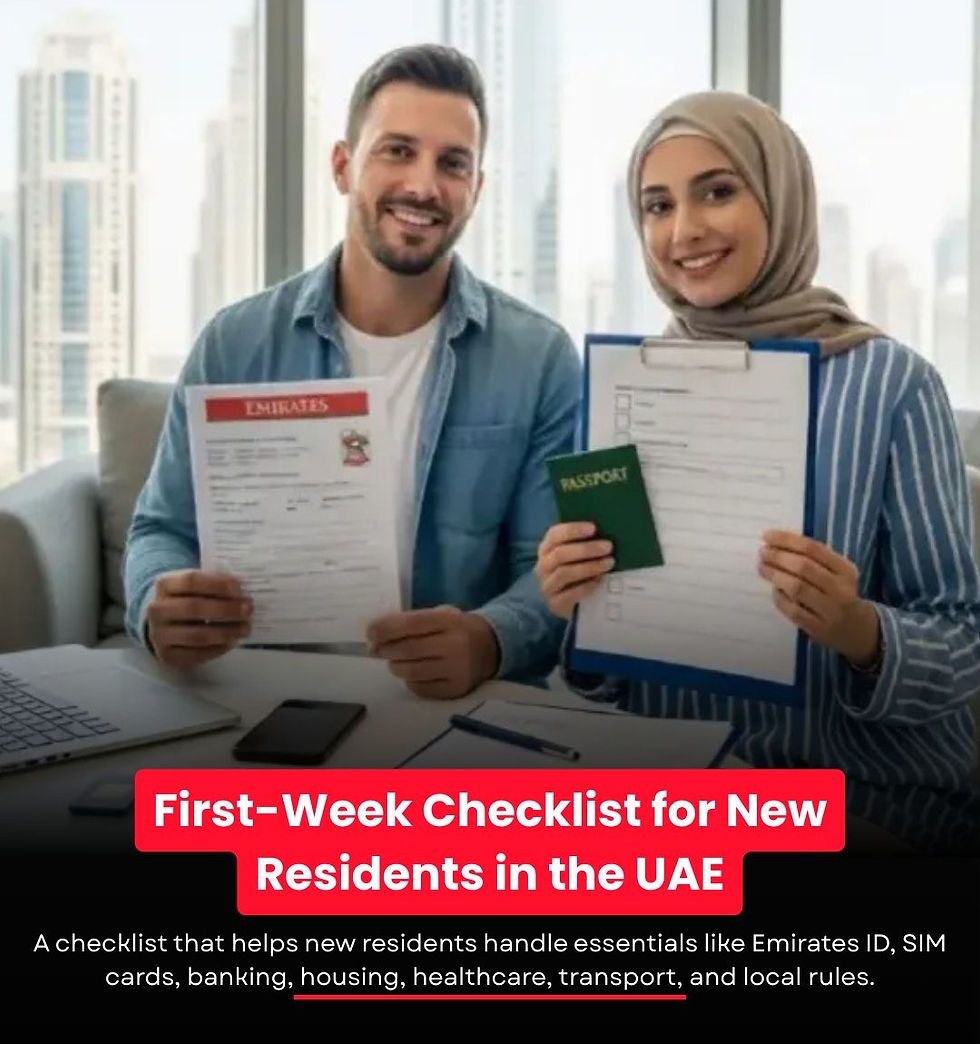
The central theme emanating from current insights for new UAE residents is the critical importance of a structured approach to the initial administrative tasks upon arrival. While the excitement of a new beginning can be intoxicating, ignoring or delaying fundamental processes can quickly turn opportunity into overwhelm. The essential checklist provided by various sources for a new resident's first week serves as a vital blueprint for a smooth transition. These tasks are not merely bureaucratic hurdles; they are the fundamental pillars upon which one builds their new life in the Emirates.
- Emirates ID: The Master Key to Residency and Services. This is arguably the most crucial document. It's not just a national identification card; it's intricately linked to one's residency visa and is required for almost every significant transaction or interaction in the UAE. From opening a bank account to registering a utility connection, accessing healthcare, or even obtaining a SIM card, the Emirates ID acts as the singular identifier and the gateway to public and private services. Securing it promptly after medical tests and biometrics ensures seamless access to the nation's infrastructure.
- SIM Card Acquisition: Staying Connected from Day One. In a hyper-connected world, immediate access to a local mobile number is indispensable. It's essential for coordinating housing, contacting employers, setting up banking appointments, and navigating daily life. Providers like Etisalat and Du offer various prepaid and postpaid options, often requiring only a passport and visa page initially, with full registration completed once the Emirates ID is processed.
- Banking Essentials: Financial Integration. Establishing a local bank account is fundamental for receiving salaries, paying bills, and managing finances. The process typically requires a valid Emirates ID, passport, visa copy, and a salary certificate or employment contract. Understanding the types of accounts available for new residents and the initial documentation requirements is crucial to avoid delays in accessing funds and settling financial obligations.
- Housing Solutions: From Temporary to Permanent Abode. Securing suitable accommodation is a top priority. Many new residents opt for temporary hotel apartments or short-term rentals upon arrival while they search for a permanent home. Understanding the rental market, tenancy laws (such as Ejari in Dubai or Tawtheeq in Abu Dhabi for registration of tenancy contracts), and typical payment structures (e.g., multiple cheques) is vital for making informed decisions and avoiding potential disputes.
- Healthcare Coverage: Prioritizing Well-being. Health insurance is mandatory for all residents in the UAE. Employers typically provide a basic level of coverage, but understanding the policy details, network of providers, and any additional coverage needs is important. Registering with a local clinic or hospital for routine care is a proactive step towards ensuring access to the nation's advanced healthcare system.
- Transportation & Mobility: Navigating the Cities. Familiarizing oneself with local transport options – from Dubai Metro and Abu Dhabi's bus network to ride-hailing services like Careem and Uber – is essential. For those planning to drive, converting an existing foreign driving license or obtaining a new UAE license involves specific procedures that should be initiated early.
- Understanding Local Rules & Culture: Respect and Integration. Beyond the administrative, integrating successfully requires an appreciation for local laws, customs, and cultural norms. This includes dress codes in public places, etiquette during Ramadan, rules around alcohol consumption, and general respectful conduct. A proactive understanding helps new residents avoid unintentional missteps and fosters harmonious coexistence.
The imperative behind such checklists is clear: to empower new residents to stay organized, circumvent unnecessary delays, and confidently transition into their new lives. A smooth initial integration not only benefits the individual but also contributes to the UAE's broader reputation as an efficient and welcoming global hub.
The History: Forging a Global Crossroads – The UAE's Evolution as an Expatriate Magnet
To truly grasp the significance of expatriate integration in the UAE today, one must journey back through the nation's remarkable history. The UAE, a federation formed in 1971, emerged from a collection of seven emirates that had historically thrived on pearl diving, fishing, and regional trade. The discovery of oil in the mid-20th century served as a catalyst, but it was the visionary leadership, particularly that of Sheikh Zayed bin Sultan Al Nahyan, the founding father, that charted a course far beyond mere resource extraction.
The UAE's transformation into an expatriate magnet was a deliberate and strategic pivot towards economic diversification. Recognizing the finite nature of oil reserves, leaders embarked on ambitious projects to establish the country as a global center for trade, finance, tourism, and logistics. This vision necessitated an influx of skilled labor and expertise that the nascent local population could not fully provide. Consequently, an open borders policy was gradually adopted, encouraging foreign professionals, investors, and workers to contribute to the nation's rapid development.
The 1980s and 1990s witnessed an accelerated build-out of world-class infrastructure: state-of-the-art airports, deep-water ports, sprawling free zones (like Jebel Ali Free Zone, established in 1985), and modern urban centers such as Dubai and Abu Dhabi. These developments required vast workforces, initially comprising construction workers, followed by professionals across diverse sectors. The establishment of free zones, in particular, offered foreign businesses 100% ownership and attractive tax incentives, further cementing the UAE's appeal.
Concurrently, the legal and regulatory framework evolved to accommodate and govern this burgeoning expatriate population. Labor laws were introduced, immigration policies refined, and a visa sponsorship system (often referred to as 'kafala') became the bedrock of residency. While this system has drawn international scrutiny and undergone significant reforms over the years, its original intent was to regulate the relationship between employers and foreign workers and ensure accountability. The demographic shift was profound and rapid; by the turn of the millennium, expatriates significantly outnumbered Emirati citizens, transforming the UAE into one of the world's most multicultural societies. This historical trajectory illustrates that the UAE's current status as a global talent hub is not accidental but the result of decades of strategic planning, proactive policy-making, and an unwavering commitment to fostering an environment conducive to international engagement and economic growth.
The Data & Analysis: Why Now? The Contemporary Imperatives of Expatriate Integration
The current emphasis on streamlined expatriate integration is not merely a refinement of existing processes; it is a critical response to contemporary global dynamics and the UAE's own ambitious national agendas. The 'right now' significance stems from several interconnected factors:
- Post-Pandemic Resurgence and Talent Mobility: The COVID-19 pandemic reshaped global migration patterns. The UAE's robust handling of the crisis, its early and effective vaccination drives, and its economic resilience positioned it as a stable and safe haven. This created a significant surge in interest from individuals and companies seeking new opportunities post-pandemic, making efficient onboarding even more crucial to handle the increased volume.
- Strategic Visa Reforms and Long-Term Retention: The UAE has embarked on an unprecedented series of visa reforms aimed at attracting and, crucially, retaining top global talent. These include:
- The Golden Visa: Introduced in 2019, offering long-term (5-10 year) residency to investors, entrepreneurs, scientists, doctors, artists, outstanding students, and humanitarian pioneers. This program is designed to attract high-net-worth individuals and those contributing significantly to the economy and society.
- The Green Visa: A groundbreaking initiative allowing skilled workers, freelancers, and entrepreneurs to sponsor themselves for five years, decoupling residency from employer sponsorship and providing greater flexibility.
- Virtual Work Visas: Catering to the rise of remote work, allowing individuals employed outside the UAE to live and work from within the country.
- Freelance Permits: Simplifying the path for independent professionals in various sectors.
- Economic Diversification and National Agendas: The UAE's ambitious economic visions, such as the Dubai Economic Agenda D33 and Abu Dhabi Economic Vision 2030, are heavily reliant on human capital. These plans aim to double GDP, establish the UAE as a leading global financial center, and foster innovation in sectors like AI, advanced manufacturing, and sustainable energy. Achieving these goals requires a steady, high-quality inflow of international talent, for whom a seamless entry experience is a major draw.
- Rapid Population Growth and Urbanization: Major cities like Dubai and Abu Dhabi have experienced significant population growth in recent years. Dubai's population, for instance, has surpassed 3.6 million, with projections indicating continued expansion. This rapid urbanization places pressure on existing infrastructure and services, making efficient government processes and clear guidance for newcomers essential to maintain service quality and urban harmony.
- Digital Transformation and E-Governance: The UAE is a leader in e-governance, with initiatives like UAE Pass (a single digital identity for government services) and SmartPass. While these platforms are designed to streamline interactions, new residents often require clear guidance on how to register and utilize these digital tools effectively, underscoring the need for comprehensive checklists and support resources. The push for digitalization means that initial physical paperwork is transitioning to digital registration, requiring specific navigational skills from newcomers.
- Global Talent Competition: In an increasingly competitive global landscape, cities and nations are vying for the best and brightest. The ease of setting up, the quality of life, and the efficiency of administrative processes are significant factors in an individual's decision to choose one destination over another. The UAE recognizes that an exemplary integration experience is a powerful competitive advantage.
In essence, the contemporary focus on expatriate integration is not just about welcoming new people; it is a strategic imperative for the UAE to realize its long-term economic and social ambitions in a rapidly changing global environment.
The Ripple Effect: Beyond the Individual – A Broader Societal and Economic Impact
The process of expatriate integration in the UAE extends far beyond the individual's personal journey; it creates profound ripple effects across government, businesses, service sectors, and the broader societal fabric. A smooth and well-managed onboarding process translates into tangible benefits and impacts a wide array of stakeholders:
- Individual Expatriates:
- Psychological Well-being and Productivity: A stress-free transition significantly impacts a new resident's mental health and overall job satisfaction. Individuals who settle quickly are more likely to be productive, engaged, and less prone to attrition, directly benefiting their employers.
- Financial Stability: Timely access to banking and understanding of local financial regulations ensure individuals can manage their finances effectively, pay rent and bills, and avoid late fees or complications.
- Social Integration: With administrative burdens minimized, individuals have more capacity to engage with their new communities, explore cultural offerings, and build social networks, fostering a sense of belonging.
- UAE Government and Regulatory Bodies:
- Enhanced Reputation and Global Standing: An efficient, welcoming system for new residents bolsters the UAE's international image as a destination of choice for talent and investment. It reflects governmental competence and forward-thinking policies.
- Effective Resource Management: Clear guidelines and streamlined processes help government entities manage the large influx of residents, ensuring public services like healthcare, education, and transportation are utilized efficiently and equitably.
- Legal Compliance and Social Harmony: By providing clear information on local laws and cultural norms, the government promotes adherence to regulations and fosters a respectful, harmonious multicultural society, minimizing potential misunderstandings or conflicts.
- Local and International Businesses:
- Talent Acquisition and Retention: Companies operating in the UAE rely heavily on international talent. A smooth onboarding experience for new hires is a crucial factor in attracting and retaining top professionals globally, reducing recruitment costs and improving employee morale.
- Market Growth and Consumer Demand: A growing expatriate population directly fuels consumer demand across various sectors including real estate, retail, automotive, education, and leisure. This demographic expansion contributes significantly to GDP and stimulates economic activity.
- Streamlined HR Operations: When new employees are empowered with resources to handle their own administrative setup, internal HR departments can focus on strategic talent management rather than operational onboarding minutiae.
- Service Industries (Banks, Telecom, Real Estate, Healthcare):
- Increased Demand and Innovation: The continuous influx of residents drives demand for services. This encourages financial institutions to develop tailored products for expatriates, telecom providers to offer competitive packages, and real estate agencies to expand their portfolios and services.
- Multilingual Support and Cultural Sensitivity: Service providers must adapt to cater to a diverse clientele, often investing in multilingual staff and culturally sensitive service delivery to meet the needs of a global population.
- Economic Contribution: These industries, driven by expatriate demand, become significant employers themselves and major contributors to the non-oil economy.
- Overall Economy and Urban Development:
- Sustained Economic Growth: The collective contribution of expatriate labor, consumption, and investment is a cornerstone of the UAE's non-oil economy, driving innovation, entrepreneurship, and productivity.
- Urban Planning and Infrastructure: Rapid population growth necessitates continuous investment in urban planning, public transport networks, housing developments, and utilities. The government's ability to manage this growth effectively while maintaining a high quality of life is constantly tested and refined.
- Cultural Enrichment: The sheer diversity of nationalities residing in the UAE fosters a unique cosmopolitan environment, enriching the cultural landscape with diverse cuisines, traditions, and perspectives, making the UAE a truly global village.
Thus, the seemingly individual act of a new resident navigating their first week in the UAE is, in fact, a miniature reflection of a grander system designed to absorb, integrate, and benefit from global talent, echoing across every facet of the nation's progress and prosperity.
The Future: Sustaining the Momentum – Evolution of the UAE Expatriate Experience
Looking ahead, the trajectory of expatriate integration in the UAE suggests a continuous evolution, driven by technological advancements, shifting global migration patterns, and the nation's own strategic ambitions. The initial administrative checklist, while foundational, will likely be absorbed into a much more sophisticated, proactive, and personalized onboarding ecosystem.
- Hyper-Personalized Digital Concierge Services: The future will likely see the extensive use of Artificial Intelligence (AI) and data analytics to offer tailored onboarding experiences. Imagine a 'digital concierge' that, upon visa approval, proactively guides new residents through a personalized journey, predicting their needs based on their nationality, profession, family status, and even preferred lifestyle. This could include pre-booked appointments for Emirates ID, pre-activated SIM cards ready for collection, and curated housing options, all managed through a single, intuitive digital platform integrated with UAE Pass.
- Further Digitalization and Blockchain Integration: The UAE is already a pioneer in e-governance. Expect even deeper integration of digital platforms and potentially blockchain technology for secure, immutable, and instantly verifiable document management. This could simplify everything from cross-border financial transfers to property registration and healthcare records, making the entire process seamless and reducing the need for physical paperwork significantly.
- Emphasis on Retention Beyond Attraction: While attracting talent remains crucial, the future focus will intensify on retaining expatriates for longer durations. This will involve not just competitive salaries and career opportunities but also enhanced quality of life initiatives, clearer pathways for long-term residency (beyond the Golden Visa), and potentially even considerations for limited forms of citizenship or permanent residency for those making significant, sustained contributions. Policies may also evolve to support family integration, spousal employment, and children's education more robustly.
- Community Building and Enhanced Social Cohesion: As the expatriate population continues to grow and diversify, there will be an increased emphasis on programs that foster genuine social integration and community building, not just within expatriate groups but also between expatriates and local Emirati culture. This could include government-backed cultural exchange initiatives, mentorship programs, and greater access to recreational and community facilities.
- Sustainability and Smart City Integration: New residents will be increasingly integrated into the UAE's vision for sustainable living and smart urban environments. This means greater emphasis on utilizing public transport, participating in recycling and conservation efforts, and engaging with smart home technologies and city services designed for efficiency and environmental stewardship. The onboarding process itself may highlight these aspects as part of civic responsibility.
- Evolving Legal and Regulatory Landscape: The UAE has demonstrated a willingness to adapt its legal framework to remain globally competitive and align with international best practices. Future legislative changes could further enhance labor protections, refine personal status laws, and streamline business regulations, all with an eye toward improving the overall experience for international residents and investors. This includes potentially more flexible business ownership rules and further reducing bureaucratic hurdles.
- Regional Competition and Distinctive Value Proposition: As other regional economies, particularly Saudi Arabia, intensify their efforts to attract global talent and investment, the UAE will need to continuously innovate to maintain its distinctive competitive edge. This will involve not only offering economic incentives but also ensuring a superior quality of life, unparalleled ease of integration, and a progressive social environment that stands out in the global marketplace.
The UAE's journey to becoming a global magnet is far from complete. The initial checklist for new residents, while seemingly a minor practical guide, is a microcosm of a larger, ambitious national strategy. The future will see this commitment deepen, transforming the expatriate experience from a series of tasks into an integrated, intuitive, and highly personalized journey, cementing the UAE's reputation as a truly global home for talent and innovation.