THE BIT OF TECHNOLOGY!
Navigating India's Bullish Tides: A Deep Dive into Market Dynamics and Future Trajectories
Introduction: A Glimpse into Market Sentiment
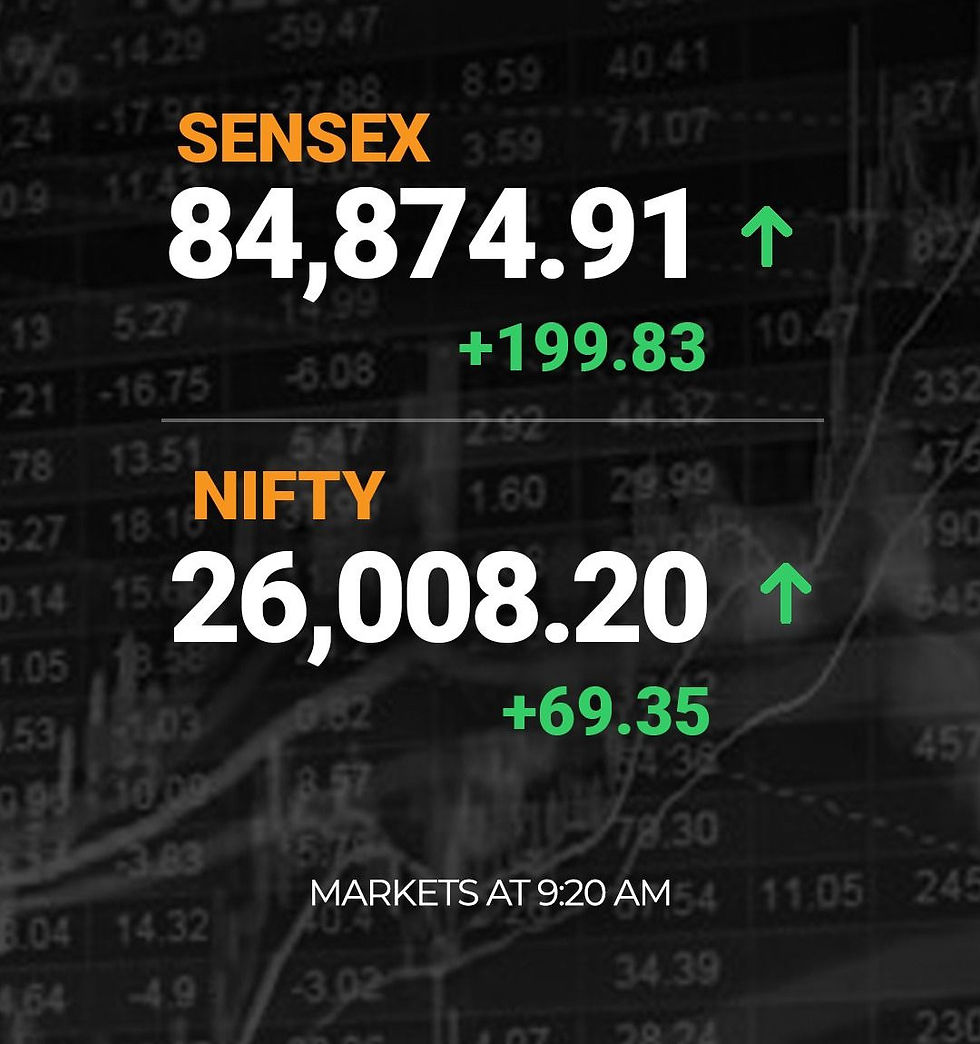
The daily ritual of market openings often serves as a barometer for the broader economic mood. When indices like the Sensex and Nifty begin a session 'in the green,' driven by 'positive cues,' it's more than just a momentary uptick; it often signals an underlying current of optimism, confidence, and favorable prevailing conditions. This seemingly simple observation – that India's benchmark indices have opened higher – encapsulates a complex interplay of global sentiment, domestic economic indicators, corporate performance, and investor psychology that defines the modern Indian capital market landscape.
The Bombay Stock Exchange's Sensex (Sensitive Index) and the National Stock Exchange's Nifty 50 are not merely numbers; they represent the collective performance of India's largest and most liquid companies across diverse sectors. Their upward movement implies that a significant portion of the Indian corporate sector is either performing well or is expected to perform well, or that capital is flowing into the market, pushing valuations higher. This article delves into the intricate layers behind such market movements, exploring the historical evolution, the immediate drivers, the far-reaching impacts on various stakeholders, and the potential future trajectories that shape India's position on the global financial map.
The Historical Bedrock: A Journey Through India's Capital Market Evolution
To truly appreciate the significance of current market buoyancy, one must trace the winding path of India's capital markets. Its origins are remarkably old, with informal trading in Bombay dating back to the 1830s. The formal establishment of the Bombay Stock Exchange (BSE) in 1875 marked a pivotal moment, making it one of Asia's oldest stock exchanges. For much of the 20th century, particularly post-independence, India's economy was largely state-controlled, limiting the role and scope of its capital markets. Trading was often characterized by opaque practices and limited public participation.
The transformative period began in the late 1980s and accelerated dramatically with the economic liberalization reforms of 1991. These reforms opened India's economy to global markets, dismantling many protectionist policies and ushering in an era of globalization. Crucially, they paved the way for the establishment of the Securities and Exchange Board of India (SEBI) in 1992 as the primary regulator, bringing much-needed transparency, governance, and investor protection to the markets. This same period also saw the birth of the National Stock Exchange (NSE) in 1992, which revolutionized trading through its fully automated, screen-based electronic system, a stark contrast to the traditional open-outcry method of the BSE.
Key milestones in this journey include:
- Regulatory Framework: The robust regulatory oversight by SEBI has been instrumental in building investor confidence, preventing market manipulation, and ensuring fair practices.
- Technological Advancement: The shift from manual trading to electronic platforms significantly enhanced efficiency, accessibility, and transparency, democratizing market participation.
- Introduction of Derivatives: The launch of futures and options contracts provided sophisticated tools for risk management and speculation, attracting a wider range of participants.
- Dematerialization of Shares: The move from physical share certificates to electronic holdings simplified transactions, reduced fraud, and streamlined the settlement process.
- Foreign Institutional Investment (FII): The opening of Indian markets to foreign capital injected liquidity and global investment best practices, integrating India into the global financial ecosystem.
- Rise of Domestic Institutions: The growth of mutual funds, insurance companies, and pension funds created a powerful base of Domestic Institutional Investors (DIIs), stabilizing markets and channeling domestic savings into equities.
Through periods of exhilarating booms and challenging busts – from the dot-com bubble to the 2008 global financial crisis and the more recent COVID-19 pandemic – the Indian market has demonstrated remarkable resilience and a capacity for growth, continuously adapting to both domestic and global exigencies.
The Present Pulse: Deconstructing Current Market Momentum
The current upward trajectory, as indicated by Sensex and Nifty opening in the green, is a consequence of several interwoven factors that define India's economic and financial landscape today. Analyzing these 'positive cues' provides a deeper understanding of market sentiment:
1. Robust Domestic Economic Growth: India has consistently been one of the fastest-growing major economies globally. Strong GDP growth figures, driven by domestic consumption, government capital expenditure, and a resurgent manufacturing sector, provide a fundamental underpinning for corporate earnings growth, which in turn fuels market optimism. The country's demographic dividend, with a large and young workforce, further promises sustained consumption and innovation.
2. Favorable Inflation and Monetary Policy: While inflation has been a global concern, the Reserve Bank of India (RBI) has demonstrated a proactive approach to price stability. Indications of cooling inflation, coupled with the potential for future interest rate cuts, can significantly boost market sentiment. Lower interest rates reduce borrowing costs for corporations, enhancing profitability, and make equity investments relatively more attractive compared to fixed-income assets.
3. Capital Inflows – FII and DII Dynamics: The 'positive cues' often include strong buying activity from both Foreign Institutional Investors (FIIs) and Domestic Institutional Investors (DIIs). FIIs are attracted by India's growth story, stable political environment, and relative insulation from global downturns. DIIs, particularly through the booming mutual fund industry and Systematic Investment Plans (SIPs), represent a powerful, consistent, and stabilizing force of domestic capital, absorbing selling pressure from FIIs during volatile periods and providing a continuous flow of funds into equities.
4. Strong Corporate Earnings Cycle: Ultimately, stock market performance is tied to corporate profitability. Recent periods have seen healthy corporate earnings growth, particularly in sectors like banking & finance, IT services, and manufacturing. This improvement is driven by increased demand, cost rationalization, and the benefits of economic reforms. Positive earnings surprises and strong guidance from companies often serve as direct catalysts for market rallies.
5. Global Market Sentiment and Commodity Prices: Indian markets rarely operate in isolation. Positive momentum in major global indices, especially in the U.S. and Europe, often spills over. Furthermore, stable or declining global commodity prices, particularly crude oil (a major import for India), can significantly improve the country's current account deficit and reduce inflationary pressures, bolstering investor confidence.
6. Government Policies and Reforms: The government's continued focus on structural reforms, ease of doing business, infrastructure development (e.g., PLI schemes for manufacturing, Gati Shakti master plan), and fiscal prudence plays a crucial role. Policy stability and a clear roadmap for economic development instill confidence among both domestic and international investors.
7. Valuation Metrics: While Indian markets might appear to trade at a premium compared to some emerging market peers, this is often justified by superior growth prospects and earnings visibility. Analysts closely monitor price-to-earnings (P/E) ratios and other valuation metrics, but sustained earnings growth can re-rate valuations higher, making current levels appear reasonable in a long-term context.
These factors combine to create an environment where a daily market opening 'in the green' is not an anomaly but a reflection of deeper, more structural positives propelling the Indian economy and its capital markets forward.
The Ripple Effect: Stakeholders and Their Interplay
A buoyant stock market, while seemingly confined to financial circles, generates far-reaching ripple effects across the entire economic ecosystem. The implications extend well beyond just the trading screens:
1. Retail Investors: For the ever-growing cohort of individual investors, a rising market translates directly into portfolio appreciation. This wealth effect can lead to increased consumer spending, higher confidence in the economy, and further participation in equity markets, creating a virtuous cycle. However, it also brings the risk of irrational exuberance and the importance of disciplined investing.
2. Institutional Investors: Both FIIs and DIIs (mutual funds, insurance companies, pension funds) see their Assets Under Management (AUM) grow, allowing them to attract more capital and potentially make larger investments. A strong market encourages more inflows into mutual funds and other investment products, strengthening the financial services industry.
3. Corporations and Businesses: A rising market significantly impacts corporations. It lowers the cost of capital, making it easier and cheaper for companies to raise funds through equity issuances (IPOs, FPOs, QIPs) for expansion, debt reduction, or acquisitions. High valuations can also incentivize mergers and acquisitions. Furthermore, investor confidence can encourage management to undertake bolder investment decisions, fostering job creation and economic activity.
4. The Government and Policymakers: A robust stock market is beneficial for the government in several ways. Capital gains taxes and transaction taxes increase revenue. A strong market facilitates disinvestment programs, allowing the government to monetize its holdings in public sector enterprises efficiently. More broadly, market confidence reflects positively on the government's economic policies and contributes to overall macroeconomic stability.
5. Financial Services Industry: Brokers, wealth managers, investment banks, asset management companies, and fintech firms all benefit from increased market activity. Higher trading volumes, greater demand for advisory services, and a proliferation of new financial products stimulate growth and employment within this sector.
6. Global Perception and Positioning: A consistently performing Indian market enhances the country's appeal as an investment destination for global capital. It reinforces India's narrative as an attractive emerging market, capable of delivering superior returns, thereby influencing global fund allocation strategies and boosting its geopolitical standing.
7. Broader Economic Confidence: Beyond direct financial impacts, a surging stock market can act as a powerful psychological stimulant. It signals optimism about future economic prospects, which can encourage entrepreneurship, foster consumer confidence, and stimulate overall economic activity, even for those not directly invested in equities.
The positive cues manifesting in higher market openings are thus not isolated events but signals of a complex web of interconnected economic and social impacts that permeate almost every layer of society.
Charting the Course Ahead: Future Outlook and Potential Scenarios
Predicting the precise trajectory of financial markets is inherently challenging, yet analyzing prevailing trends and potential catalysts allows for informed scenarios. India's future market performance will be shaped by a confluence of domestic strengths and global dynamics.
Key Long-Term Drivers for Continued Growth:
- Demographic Dividend: India's young, large, and increasingly skilled population presents an unparalleled opportunity for consumption-led growth and a sustained workforce.
- Digital Transformation: Rapid digitalization across sectors, from payments to e-commerce and public services, is driving efficiency, innovation, and new business models.
- Manufacturing Push (PLI Schemes): Government initiatives like the Production Linked Incentive (PLI) schemes aim to boost domestic manufacturing, attract FDI, and reduce reliance on imports, fostering economic diversification and job creation.
- Infrastructure Development: Massive investments in physical infrastructure (roads, railways, ports, airports) and digital infrastructure are crucial for long-term productivity gains and connectivity.
- Financial Deepening: The growing penetration of financial services, increasing financial literacy, and the formalization of the economy are channeling more savings into productive investments.
- Energy Transition: India's commitment to renewable energy and green technologies not only addresses climate change but also opens up vast investment opportunities and promotes sustainable growth.
Potential Headwinds and Risks:
- Global Economic Slowdown: A significant recession in major economies could impact India's exports, capital inflows, and overall growth momentum.
- Geopolitical Instability: Regional conflicts or global trade wars could disrupt supply chains, elevate commodity prices, and dampen investor sentiment.
- Persistent Inflation: A resurgence of inflationary pressures, driven by either global factors or domestic supply-side issues, could force the RBI to maintain a tighter monetary policy, impacting growth.
- Policy Execution Challenges: While reforms are well-intentioned, their effective and timely implementation remains crucial. Bureaucratic hurdles or unforeseen consequences could slow progress.
- Climate Change Impacts: Extreme weather events could affect agricultural output, disrupt supply chains, and impose significant economic costs.
Scenario Planning for the Indian Market:
1. The Optimistic Scenario (Continued Bull Run): This scenario envisages India maintaining its high growth trajectory, supported by stable government policies, contained inflation, strong corporate earnings, and sustained FII inflows. Domestic consumption remains robust, and infrastructure projects progress efficiently. In this scenario, market valuations could continue to expand, possibly driven by a re-rating as India's economic fundamentals strengthen relative to global peers.
2. The Moderate Scenario (Growth with Volatility): Here, the market experiences growth, but with intermittent periods of consolidation or correction. This could be triggered by global economic slowdowns, temporary inflationary spikes, or domestic electoral uncertainties. Sectoral rotations would be common, with investors moving between defensives and cyclicals based on prevailing conditions. This scenario implies healthy long-term returns but requires investors to navigate short-term fluctuations.
3. The Pessimistic Scenario (Significant Correction): This less likely but plausible scenario would involve a confluence of severe negative factors, such as a deep global recession, persistent high inflation forcing aggressive rate hikes, or significant domestic policy missteps. A sharp and sustained outflow of foreign capital, coupled with a decline in corporate profitability, could lead to a substantial market correction. However, given India's strong domestic consumption base and regulatory frameworks, any such downturn is likely to be met with policy interventions aimed at stabilization.
Conclusion
The simple news of Sensex and Nifty opening higher is merely the tip of a vast iceberg, reflecting the intricate forces at play within India's dynamic capital markets. From its historical roots as a colonial-era trading outpost to its current standing as a global economic powerhouse, India’s market journey underscores resilience, adaptability, and an ever-increasing integration with the global financial system. The current momentum is a testament to robust domestic economic fundamentals, proactive policy measures, and a maturing investor base. While challenges and global uncertainties persist, India's structural growth drivers, demographic advantages, and commitment to economic reforms position its capital markets for continued relevance and potential expansion. Navigating these waters requires a keen understanding of both immediate market signals and the deeper currents that define one of the world's most exciting investment landscapes.